Principle of Ozone Generation
01
Decomposition of Oxygen Molecules Energy Input Stage

O₂2O

When strong energy (such as high-voltage discharge or ultraviolet radiation) is applied to oxygen (O₂), the oxygen molecules split into two oxygen atoms (O)

The generated oxygen atoms are highly unstable (in an activated state)

02
Ozone Formation Recombination Stage

OO₂O₃

The separated oxygen atom (O) recombines with an oxygen molecule (O₂) to form ozone (O₃)

03
Overall Reaction Summary

3O₂2O₃

In summary, three oxygen molecules are converted into two ozone molecules.

Applications of Ozone Generators
Segment Key Customers Purpose of Adoption Recent Trends

Water & Wastewater Treatment

Water treatment plants

Municipal wastewater facilities

Industrial wastewater treatment plants

Disinfection

Deodorization

Reduction of color and trace contaminants

Avanced treatment

Closely linked to government expansion of advanced treatment standards

Food & Beverage

Wash water

CIP systems

Process water

Reduction of chemical usage

Microbial control

Reduction of residual odors

Growing demand for chemical-reduction solutions

Semiconductor & Precision Processes

Cleaning

Surface treatment

Specialty processes

High-purity oxidation

Process stability

Emphasis on dedicated equipment and precise control

Air Purification & Deodorization

Industrial sites

Public facilities

Kitchens/warehouses

Odor removal

Hygiene management

Increasing availability of compact and wall-mounted units

Agriculture, Aquaculture & Cleaning

Smart farms

Hydroponics

Washing lines

Increased dissolved oxygen

cleaning & sterilization

Productivity improvement

Rapid adoption of nanobubble-integrated solutions

Ozone Generation System Diagram
 
Ozone Generation and Treatment System
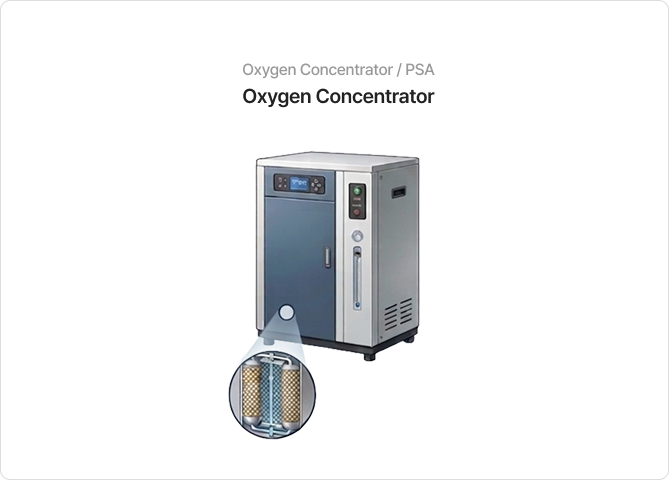
01 Raw Gas Supply Unit
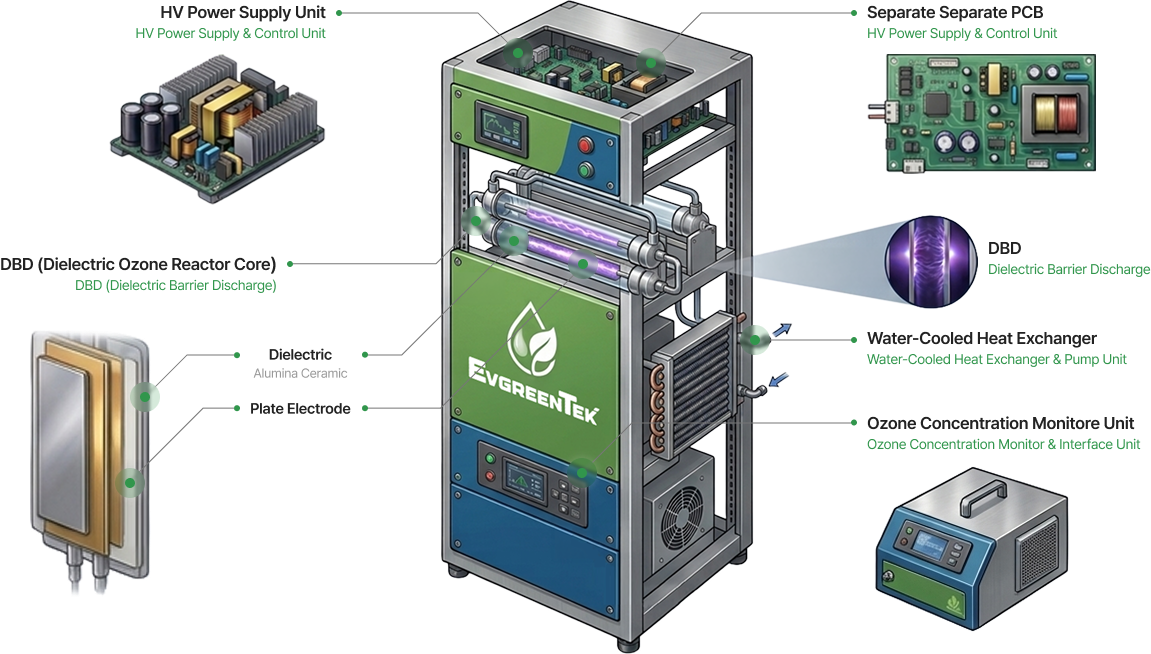
02 Ozone Generation Unit
03 Cooling and Control Unit
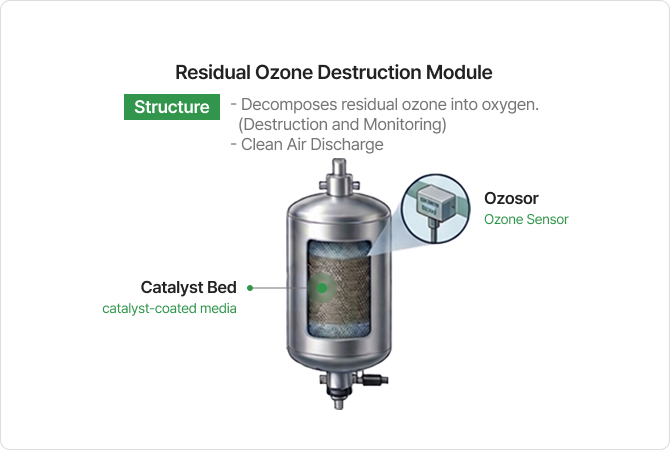
04 Residual Ozone Destruction Unit
Ozone Generator Product (Large-volume, High-concentration product)
 
Industrial Ozone Generator - EGT-200G/H
SPECIFICATIONS
Capacity
200 g/h
Technology
DBD (Dielectric Barrier Discharge)
Cooling Method
with Plate Electrode (Selectable: [Water-Cooled] / [Air-Cooled])
Max. Power Consumption
<as determined by the 200g/h capacity>
Dimensions
(Select logical dimension scale and render scale labels, e.g., 600W * 600D * 1800H [mm])